Showing posts with label Enterprise Social Networks. Show all posts

Monday, April 14, 2014

Case Study: Enterprise Social Network @ Pfizer – Pfizer World intranet & My World

Pfizer, one of the world’s largest pharmaceutical companies in terms of revenues, with employees of around 1, 00,000 and operations across 150 countries in the world had implemented an enterprise social network styled intranet within the company for their employees to communicate and collaborate across the globe. Pfizer World intranet is built on Microsoft SharePoint platform and the company prior to this had more than 400 intranet sites. Bob Libbey, Head of Digital and Social Communications at Pfizer, Inc., likes to think of PfizerWorld – the company’s singular internal channel - as an online town square. “People come to get their news and information about the enterprise - about the various pieces of Pfizer - that’s a big part of what’s made the project a success. Obviously we use email a lot; we distribute a promotional newsletter twice a week to show what’s upcoming in PfizerWorld. We need to be careful not to overload people. We’re always looking for ways to help people sort their information. That to me is the biggest challenge right now - helping people prioritize all the news and information that we’re sending to them,” Libbey explains.

In 2008, the site had 1.4 million article views; in 2009, the number jumped to 3 million article views, along with 10 million site visits on the whole. For 2010, article views topped 5.2 million and visits reached 55 million. In its third year, PfizerWorld generated 5.3 million article views and 61 million page views, up 279 percent and more than 1,000 percent respectively over the predecessor site. And the project yielded $20 million in maintenance, support, and development savings over the four years. The news crawl runs along the bottom of people’s desktops and includes the top stories of the day from PfizerWorld, top news clips of the day disseminated by the Media Relations team and breaking news as needed.  Pfizer also launched a social networking hub called My Worlda personalized intranet page to increase employee engagement, enable information sharing and facilitate collaboration; and a colleague message board called Moving Pfizer Forward to encourage candid discussion about company issues and employee engagement  and introduced as part of our PfizerWorld intranet platform back in 2010. That first year this internal networking hub drew 41,000 unique users who generated 800,000 page views. The second year it rose to approximately 60,000 users driving 1.6 million page views. Pfizer expanded its Social Media Policy to reflect the rise in usage of internal and external social media channels across the company. 

Internally, Pfizer created new employee channels, including the only pharmaceutical-company sponsored blog for Pfizer scientists, Think Science Now, on Pfizer.com; a personalized intranet page for employees; and a colleague message board. Pfizer also made content easier for visitors to share through Facebook, RSS etc. Many of the blog postings from Think Science Now appear on Pfizer’s Facebook page, for instance. Pfizer had been able to implement and integrate social network styled tools and platform internally so that employees can actively use it, collaborate and communicate with colleagues across the globe and work together to achieve the organization goals.


Sunday, March 30, 2014

Case Study: Enterprise Social Networks @ Toyota – Knowledge Sharing & Collaboration

Toyota uses Salesforce.com enterprise social network platform called Chatter that facilitates internal communication between hundreds of thousands of Toyota employees across the world to interact, share and collaborate with each other on a day to day basis and work for the organizational growth. Employees have to login to access the intranet, join groups and participated in discussions of their interests and can post updates, comments, opinions, questions and get answers and suggestions from coworkers based in 170 countries around the world.  With Chatter platform allowing collaboration and sharing of information and documents employees can actively collaborate and work together to resolve critical issues. “People have only 24 hours a day,” says Toyoda. “But through social we can connect with many people at once.” Enterprise social networking platforms are critical tools for knowledge management as organizations need to document and share the knowledge within the organizations effectively for growth. "Most of the knowledge is tacit. It is walking around in the heads of our employees," said Steve Kang, social enterprise manager for Toyota. "The question is how do you get that knowledge? How do you extract that knowledge? Because it's not written down anywhere. This provides us with a way to do that."


Toyota started using the Chatter based intranet since 2012 and employees can access the intranet not only through desktops but also using the mobile devices like iPad, Android and BlackBerry applications. Employees can create topic centered groups and engage with others on this platform and interactions should be mostly work related and one of the popular group is the "ask all Toyota" for employees to pose questions to other Toyota workers around the globe. Another important usage of Chatter in Toyota is the cross-departmental task forces that collaborate across different departments located across the globe and they prefer chatter rather than the traditional email as Chatter allows easy flow of information between collaborators.  Even the senior management in Toyota actively use intranet to communicate with employees and employees keep track of the posts by the senior management. Toyota even implemented a translation service within the chatter so as there will be seamless interaction between Japanese and Non-Japanese employees that enhanced communication among Toyota employees around the world, leading to quicker decision-making and information-sharing as enhanced communication ultimately help to make products and services best suited to consumers. Along with digital modes of communications Toyota also uses face-to-face contact where in Senior management regularly walk around and talk to employees and also regularly hold roundtable discussions. Employees are critical part of organizational success and organizations need to implement platforms that allow communication, collaboration and sharing of information and knowledge between employees and also with senior management so that they can also work together for achieving the organization goals and objectives. Enterprise Social Networks also allow employee engagement with customers and also allow engagement on external social networking platforms too. 

Sunday, January 5, 2014

Enterprise Social Networks Case Study – Nestlé created Facebook styled intranet NestChatter

Nestlé has more than 330,00 employees worldwide and manages some 2,000 brands like Nescafe instant coffee, Kit Kat, Maggie, Nespresso coffee, Pure Life bottled water, etc. and each day sells 1.2 billion items. Nestle has a very active presence on various social networking sites like Facebook, Twitter, You Tube, etc. The company successfully manages 1,500 pieces of content being posted every day on social media, 50 percent of all Nespresso capsules being sold online, 180 million Facebook “likes” (with growth of 5-7 percent every month) and 200,000 employees on an internal social media platform. The company has more than 170 million fans across over 750 brand pages on Facebook alone. Company planned to embrace the social media both externally for customer engagement and internally for employee engagement. For social media strategy to be successful a well-planned and developed content strategy is a must. Content developed by professional media agencies, content generated by customers and also the content generated by employees is essential for any social media strategy to work. Enterprise Social Networking software developed by IBM, Saleforce.com, etc. play an essential role as the companies can create their own Facebook styled intranets within the company for active employee engagements.

Nestlé embraced social media inside the organization successfully and it implemented one of the largest internal social networks with more than 200,000 users using enterprise social network platform developed by Salesforce.com’s Chatter platform. Facebook styled intranet which Nestlé created is called NestChatter that significantly increased the level of sharing and collaboration by employees in the company located worldwide. Employee communities were formed with an agenda to promote online listening best practices and another strategy “Winning with Mobile” that is mobile apps and mobile friendly sites. Company went further and also used it to recruit talent with relationship-building skills and such employees were identified based on the way they collaborated and participated on the intranet platforms. Nestlé has been on focusing on finding ways to encourage and spread virally digital communication among employees across the globe. Employees are asked to blog and are scored on likes, viral share and post clicks. There is an internal version of YouTube and Facebook (similar to Chatter) with employee-generated content.


NestChatter streamlines the passions and experience of employees to create content, and use it as internal currency and also encourages creating new ideas and recognizing innovative staff members. The intranet too also improved the efficiency of employees through sharing information, collaborating on projects across geographical regions and time zones, efficiency of marketing teams that using the information created new innovative campaigns for various products and also helped in testing and interacting with customers in innovating new products and improve existing products. Active engagement by customers has reduced significantly the time to market and product failures too. Another case that significantly highlights the need for Facebook styled intranets within the organization that not only promotes employee engagement but also generates content that is very critical component of social media strategy.

Monday, July 15, 2013

Social Media Strategy @ Ford Motor Company – One Social Vision

Ford social media strategy is integrated into the company’s overall business strategy not just with marketing strategy. Ford had adopted the social media strategy that included employees, dealers and customers which helped the company to exactly understand the key drivers and critical success factors that are driving the company success. Ford social media also provides a unique view of the customers and other social media users’ feedback, opinions, wants, needs and this engagement also led to generation of crucial information that help Ford Motor Company to improve product development, advertising or product marketing. Ford has created its Social Hub, website called Ford Social which provides a platform for costumers and fans to consume information interact with other users and provide feedback and suggestions to Ford. Of all the ideas users submitted, Scott Monty, Head of Social Media, Ford Motors Co said that 40% were either already in vehicles or were currently being worked on. Ford spends 20-25% of their total marketing budget on the digital platforms that roughly estimates to close to US$150 million per year which is higher than any other player in the automobile industry globally.

Ford has integrated social media into its marketing mix through a hub-and-spoke model, which means employees throughout the company can play a significant role in customer engagement process by knowing the message the company wants to give to customers and communicating with consumers in their own voices based on their specialization. Ford Social Media Strategy can be summed up as consistent presence in free social networking sites, paid digital efforts and other emerging forms of public communication. Consumers can engage with Ford in everything from Facebook pages to ads, from Twitter profiles to promoted tweets and trends, and from banner ads to rich media. Ford has more than 1.9 million likes on Facebook, more than 244,600 followers on Twitter, more than 171,000 subscribers and 4.4 million views on YouTube. Ford's Yammer enterprise social network internally for engaging employees has grown to have about 17,000 registered users (about 10% of them active participants). Ford is using Yammer to prove the business value of internal social networking with employees but no long-term commitment to Yammer has been made as the technology of choice.

According to Scott Monty, Ford has begun implementing the “One Social vision,” which was approved by top management of the company at the end of 2012 which is sponsored internally by the Ford’s chief marketing officer, chief communications officer, chief information officer, and chief technology officer. Scott Monty said, “The vision has been approved but we’re going back to some of the executive committees to get a commitment to structure and funding and putting a plan together.” As it stands now, he explained, there are “four pillars” to the One Social vision: Listen and engage; measure and monitor; learning and training; and growth and scale. “The notion is, turn Ford into a social business,” bridging its external social networks presence and internal social structure so that there’s a free flow of information from one to the other. “Whatever department you’re a part of, any of these four pillars should be relevant to you,” he said.

Sunday, July 29, 2012

Social Media @ Intel – Planet Blue internal social network for Employees


Intel, the world's largest and highest valued semiconductor chip maker, based on revenue has an internal social media platform called Planet Blue that was launched in 2009, which is company controlled Facebook styled intranet, where more than 1,00,000 employees can connect with each other, collaborate and share knowledge. Planet blue includes blogs, wikis, status updates, discussion forums and employees can also form groups based on their interests, hobbies, etc. Employees not only communicate and create groups but also use the platform to ideate and innovate which is essential for Intel as there is constant pressure on the company to develop new products. Intel earlier had a wiki based platform for collaboration, called Intelpedia, "the Intel encyclopedia that anyone can edit," was launched in 2006, which employees can edit freely  and had millions of pages and thousands of contributors. Intel had a culture of technology-based information-sharing since early 2003, when employee blogging started predominantly included self-maintained servers under desks and these internal employee blogs gained popularity. Intel CEO Paul Otellini launched his employee blog in 2004 and other top execs and leaders followed throughout 2005 culminating in a fully IT-supported platform that same year. Intel also started its popular developer blogs and wikis for software collaboration called Intel Software Network back in May 2006. In April 2007, Intel created Blogs@Intel as a new business tool for customers and employees to directly communicate and collaborate. In June 2008, Intel added the Digital IQ training program for employees that contained around 60 programs online with certification on how to use these social media tools to increase innovation, communication and collaboration at work.

According to a post titled “How successful is your Enterprise 2.0 strategy?” on Intel communities, “some of the metrics Intel track are related to adoption – such as active users (creators, synthesizers, consumers) and “unique visitors”. However, these indicators may not accurately represent the success indicators of the platform. Quality of discussions, impact of these discussions on the users, problem resolutions, agility in solving issues, ability to find subject matters experts quickly could be different parameters which can really show how successful the platform is.” This highlights that Intel closely monitors its social media styled intranet and hopes that the intranet will fuel social learning among employees and also use it for their career development where they can look for positions and chat about their career progression. Intel created a comprehensive set of social media policies called the Intel Social Media Guidelines that are available in over 35 languages designed to help employees to understand how to manage their social media presence. Intel also created Social Media Center of Excellence, which is a cross functional body of experts from Marketing, PR, legal and Digital Communications, who collaborated to create guidelines, processes, strategies, and skill-building courses for how Intel employees can use social media tools like blogs, wikis, Twitter, Facebook, and social networks around the world. Intel is further looking to improve its Planet Blue and is looking to add voice control features to the content so that employees can use it effectively for their collaboration, communication, learning and knowledge sharing initiatives. 

Sunday, April 29, 2012

Enterprise Social Networks 2012 – Increasing adoption in near future


The success of consumer social networking sites like Facebook, Twitter, LinkedIn, etc have forced the businesses to provide enterprise social networking within the organizations as employees are asking for such platforms and if not provided employees are using free social networks which is risky for the businesses as they lack control. Enterprise social networks are social networks deployed internally within the business organizations where access is limited to their employees and limited number of stakeholders like consumers, etc and are tightly controlled through strict policies by company management. Enterprise social networks have seen good adoption since past few years and these networks include Facebook styled profile pages that highlight employee expertise, interest, hobbies, activity streams and updates, blogs, wikis, communities, forums, RSS feeds, bookmarks, video/photo sharing and other tools that help employees within the organization spread across the world to communicate, collaborate and share knowledge and information and break barriers erected in multi national companies. Business to Business and Business to Consumers communities can also be built on the enterprise social networking platforms that allow sharing, collaborating and participate in the business related conversation and projects. Mostly IT and Internet Companies are at the forefront of enterprise social network adoption and traditional companies like manufacturing, etc have yet to adopt these platforms.

Forrester predicts explosive growth for the enterprise social software from 2011 revenues of US$ 600 million to US$ 6.4 billion by 2016 which is a CAGR of 61%. It also predicted that new social enterprise applications that allow systematic grouping of employees, information and processes will deliver good return on investment when compared to previous generation of collaboration apps like email, instant messaging, and videoconferencing that are called Unified Communications & Collaboration.  According to Gartner Research, the worldwide market for enterprise social software will top $769 million in 2011, up 15.7% from the $664 million spent in 2010; $578 million spent in 2009 and predicts revenues will reach US$ 1 billion by 2012. IDC forecasts that enterprise social software market will generate revenues of nearly $2 billion by 2014, which is a CAGR of 38.2% over the 2009-2014 forecast periods. Research firms predict a significant growth in enterprise social network revenues in the near future as more and more business organizations start adopting these platforms internally for their employees. Surveys by Forrester and Altimeter Research have highlighted that despite having attention of the management, adoption is slow but increasing and management’s have yet to be convinced of the potential of enterprise social networks in terms of productivity and profitability.

Similar to email that changed the way employees communicate within the organization; enterprise social networks will change the way employees interact, collaborate, and share information and knowledge that is critical for their performance improvement and organizational profitability. These platforms bring a personal touch to communication, sharing and collaboration process and motivate employees who are geographically dispersed and with different socio-cultural backgrounds by creating a sense of empowerment, also through employee profile pages employees and management can know about the expertise, interests and collaborate in key projects and transfer knowledge and finally play a critical role in organizational innovation and development as employees share their knowledge, best practices, streamline processes by avoiding duplication, wastages and provide ideas for the development of the products and services. This will finally lead to improved products and services, improved communication and collaboration with customers which will help in improving their satisfaction and improved organization reputation and profitability. Engaging employees in the innovation and idea generating process is one of the crucial activities being done by most of the businesses today be it large or small and the enterprise social networks will act as a backbone for such initiatives. Along with enterprise social networks, consumer social networks presence is also critical for the businesses and businesses have to find a way to securely integrate the consumer and enterprise social networks for better results.

Businesses are just looking at enterprise social networking as a collaboration and communication tool for employees but not as a tool that will help in faster decision making, business process improving, employee retention and a tool that help in reducing the email volumes and meetings costs. Businesses too are not convinced about the return on investment or business value that these platforms generate and because of this the spending is very low on these tools, after initial euphoria there has been reduction in focus and there is not serious effort from the management to measure the impact of these platforms. Lack of active participation of the employees and lack of proper training, understanding of the significance of the enterprise social networking in terms of improving their performance, productivity and organizational performance is also slowing down the adoption of enterprise social networks. Some of the businesses are offering gifts and other incentives to encourage employee participation but with limited success. There also need to be an organization policy and guidelines for employees for avoiding the misuse and other problems. Businesses also need champions, responsible for monitoring, controlling and initiating the various activities on the enterprise social networks and champions should be selected from all the levels of organization including the management executives and they should be active.

Enterprise Social Networks is a major trend and the businesses have to change their approach in implementing this platform by looking at it a source of business value creation and formulate policies & strategies for increased participation of employees and use it a transformational tool for overall organization development. They are just looking at it as a mere technology without having any performance metrics for measuring the impact. The constant communication and collaboration will generate knowledge, streamline processes and increase the flow of information across hierarchical levels within the organization. Management can interact with employees at all the levels and the two way communication will be a major advantage for management to understand employee concerns and for employees to understand management plans and strategies. For the success of enterprise social networks, top management and executive sponsorship is a must and their regular participation is also necessary. Like the way consumer social networks changed the way people communicate with family and friends, voice their opinions and share information and knowledge, enterprise social networks too have the potential to change the organization communication, collaboration and knowledge sharing processes by removing  communication barriers between the employees and the management and together work for attaining the organizational goals.

Tuesday, April 24, 2012

Social Media @ eBay – Intranet Hub for employees


eBay initially rejected its employees request for an enterprise social network and employees were forced to set up their own network on Yammer, a private company that provides the platform for employees of a business to easily setup a free enterprise social network with limited features and functions for that business. The businesses have the option of take over the Yammer network being used by their employees by paying the necessary fees and upgrading their accounts. When eBay management realized that there are significant numbers of employees (around 3,000 employees) are actively engaging on the Yammer network they too considered to take over the network and upgrade by paying the necessary fees but decided not to do so as the Yammer did not have many features and functions that eBay wanted. eBay then decided to develop its own official enterprise social network using NewsGator, an add-on to Microsoft SharePoint and which will be a state of the art platform that will not only accelerate the platform usage by employees but also helps in improving the productivity and performance of the employees. Before finalizing the platform eBay also evaluated other platforms like Jive, Ning, and Chatter but finalized the NewsGator and SharePoint as SharePoint is easy to be integrated with other tools and platforms within the organization IT infrastructure.

With more than 16,000 employees across the globe, eBay created an intranet called the Hub that not only helps employees to perform their jobs in better way but also engages employees with an simple, friendly design and consistent with company identity.  The intranet is also a hub for meetings and company wide events like corporate news, videos, messages, analyst presentations, executive presentations etc and also plays a key role in internal communications with employees that feature blogs, forums, video/photo sharing and discussion boards. Each employee in the company has their own profile page which they can personalize with personal information, upload their photos, engage with other employees who share similar interests and create their own blog and other media. The intranet platform also allows employees to post and receive updates from intranet to multiple internal or external networks like LinkedIn, Facebook, Twitter, etc at the push of a button. iChannel is You Tube styled video sharing platform that runs on the eBay intranet and works as a discussion board and communication channel between the employees and management ( Ask a Leader) and recently this channel is used by the CEO to clarify the employee concerns about Skype sale. eBay adopted a test and learn methodology which will help in refining and developing an effective platform that will be easy to use for the employees.

This intranet platform was initially tested with 1000 employees and in November 2011 went live for all the eBay employees. But the intranet is of no use without employees having their profiles uploaded and their active participation and with an aim to encourage the employee participation eBay started a contest called “Hubgrade” that gave eBay employees a chance to win Starbucks gift cards or the grand prize an Xbox. This helped in increasing the employee profiles by more than six times and employees started actively participating in the intranet and build communities, search for information, and even post status updates to the corporate network, LinkedIn, Twitter , etc simultaneously. With rise in participation by the employees’ eBay also launched a innovative mobile application through which the employees can access the intranet Hub away from office which allows to employee directory, meeting schedules, locations and other information access to the information. eBay is using various promotional initiatives like contests, virtual screen savers, training, etc to further increase the employee engagement on the intranet Hub. More active employees with complete profiles will help in the employee’s communication with one another for work, knowledge sharing, common interests/hobbies, collaborate for work and other projects and also improve the overall organizational performance along with their individual performance.

eBay is world’s largest online market place that connects millions of buyers and sellers and company has more than 100million active users globally. Other businesses in the portfolio include PayPal, StubHub, Shopping.com and others where millions of people to buy, sell, and pay online.  The company actively participates on various social networking sites for engaging with their customers and also wanted to provide their employees the similar social networking styled platform internally for increasing employee engagement, collaboration and effectiveness. eBay wanted a platform that will enhance employee performance and also help them in actively improving the organizational performance. Even though the company initially had apprehensions about the effectiveness of the social media styled intranet but the employees convinced the management and started working on the development of the intranet in September 2010. eBay believes that this social intranet initiative will improve collaboration and communication and plays a crucial role in employee retention as the company has to invest significant amounts of time, money and resources in training and inducting employees into the company. The company is hoping to use the social media and networks more effectively for both the employee and organizational benefits. 

Friday, March 16, 2012

Social Media @ Cisco-Quad based Integrated Workforce Experience for Employees


Cisco integrated social media at a strategic level and provided its employees internal collaboration tools and intranet which employees were actively encouraged to use them for improving their performance and their productivity. Top Management invested millions of dollars in developing these tools and platforms and the CEO, CTO and other top executives of Cisco are active bloggers and initiate conversations that inspire employees to actively participate and use these tools. Cisco believes it is necessary for businesses to adapt to the new trends and changes that are happening with the rapid rise of mobility and the availability of devices like tablets, smartphones, etc. Employees as well as consumers are using these devices and other social networking tools extensively in their personal lives and are looking to use them in workplaces and businesses do not have any other option but to provide them with access to such devices and tools for the organizational success. Cisco provided its employees IWE, which is a platform that has various tools for networking, sharing, communicating with other employees within the organization.

Cisco's global intranet home page is Cisco Employee Connection which employees use for everything from meeting schedules, e-mail, and communications to online expense reporting, distance learning, and telecommuting services. For Cisco employees this intranet has been a platform to share and collate information and knowledge among themselves but it lacked the personal touch and feel. Employees were also looking to use collaborative tools like blogs, wikis, videos, forums etc within the organization in their projects and daily activities. Cisco in 2009 developed Integrated Workforce Experience (IWE) an internal collaboration platform that employees can use effectively to connect, communicate, and collaborate with people and communities, as well as share information for organizational growth, encourage innovation and create sustainable productivity. In 2010 Cisco moved IWE to Cisco Quad environment which provides all the social networking tools like blogs, Facebook and twitter styled, YouTube styled video sharing sites, etc to all the employees internally.

IWE allows employees to find and connect with experts within the organization through an internal directory similar to Facebook with employee profiles that highlight their expertise, activities and interests and helps in socializing among employees. Employees can also create communities and organize into groups based on their work, expertise, interests, hobbies, etc and collaborate and share knowledge for the organizational success. Employees share content in the form of documents, videos, blog posts, discussion forums and IWE is the most important source of data and information for the employees and they can distribute the information easily with IWE. Another important feature of IWE is personalized workspaces for the employees called My View which is user defined home page that provides access for people, communities, news, applications and events and also provide the necessary updates and activities of various connected employees and member communities. Employees can easily interact with the internal systems of Cisco easily through IWE and use it in their daily activities and transactions.

According to Cisco, key statistics highlight the IWE use among employees as of mid 2011:  Nearly 87,000 unique visitors with software developers and salespeople comprising the largest portions of this total.  More than 900,000 visits to the IWE site per quarter and the overall average of 6.05 visits per week per user indicates that IWE has become a regular part of employees’ work activity. More than 1000 IWE communities created, of which slightly more than half are open to all IWE users. The number of communities has quadrupled in one year as employees see IWE's value for sharing information and resources with colleagues by project, location, interest, etc.  Almost 14,000 IWE users "follow" other users in order to receive alerts when those employees posed new information or take other action within IWE. The follow capability is especially effective for technical experts and managers who post resources of interest to multiple colleagues within their department or across the company. Statistics also show the popularity of IWE features:  A 25 percent increase in the number of IWE discussion forum messages in one month. 1,400 videos created by Cisco employees and embedded in IWE for on-demand viewing via the Cisco Show and Share solution. (Source:  How Cisco IT Evolved Enterprise Social Software and Collaboration)

Cisco employees are provided with the necessary guidelines and policy is in place to control the social media activity and the strategy for social media is determined by a team of ten people called centre of excellence. Within each department responsibility lies with specific people who control the activities. Employees are trained through 30 workshops which trains employees in terms of social media policy and how to behave on social media platforms and necessary certifications are provided once they complete the trainings and the people who control the social media activity and participate in the social media strategy formulation these trainings are must. Cisco Social Media Policy also encourages employee participation in various platforms and they are also provided with incentives for such participation. Employees who are key contributors are rewarded through mentions in newsletters, annual awards and also team awards are given for active participation. The social media participation with customers and other employees is also a KPI in the employee annual performance review process. Employees are also provided with the support of the technical experts who will help in the participation on the social media platforms and create, distribute content like videos, blog posts, documents, etc.

Cisco created a culture within the organization that actively supports the use of various social networking tools within the organization by the employees to collaborate, communicate and share knowledge. The quad based IWE is at the centre of this and top management use of Video conferencing, blogs, wikis and podcasts as part of the communication with the employees has encouraged employees even more too actively use the social media tools as evident in the usage statistics. Cisco has realized significant business value in terms of cost savings, improved employee productivity, and transformed business processes through the IWE platform. Cisco gained between US$3 million and $24 million in the value of increased employee productivity based on IWE usage and expects to increase to between $9 million and $68 million by mid-2012 based on increased adoption. Cisco also benefited in increased sales of products as employees and sales teams collaborate effectively in driving sales. Cisco also uses social media actively in its B2B initiatives with customers and channel partners. With tremendous success of Quad internally within Cisco, Cisco sold the Quad offering externally to customers and Cisco has 50 companies — about 700,000 users — paying for the service. 

Thursday, February 16, 2012

Social Media @ Cognizant Technology – Cognizant 2.0 platform for employees


Cognizant Technology Solutions is a global provider of custom information technology, consulting and business process outsourcing services and it has 137,700 employees and generates revenues of around US$ 6 billion. Cognizant has significant practices in key industry verticals including BFSI, Healthcare, Manufacturing, Retail & Logistics, Communications, Media & Entertainment, etc. Company has seen significant growth in the past few years and it has dethroned the Indian vendor Wipro from the third positions and is chasing Infosys for second position. Employees need to communicate with one another for project related activities and also for understanding each other personally and culturally. These interactions are essential for the global organizations to run smoothly, knowledge management, innovation and operational efficiencies. Cognizant believes that social media tools and content are valuable assets for the company and it has created a social media platform that integrates its knowledge management, work management, and partner engagement strategies. Employees collaborate and share knowledge and build client relationships using the Cognizant 2.0.

Cognizant had launched internal social networking through its Cognizant 2.0 platform that allows employees to interact among themselves in 2007. Cognizant spent nearly $10 million on its C2 platform according to IDC. Cognizant 2.0 maps the entire workflow, across varied skills, geographies and business units and it reduces time to identify the best team for the project. The network connects associates, clients, and stakeholders and also helps to share knowledge using blogs, wikis, read tweets, post queries and manage projects using consistent tools and process. C2 provides a virtual “town square” for more than 137,000 Cognizant associates and over 100,000 users have collaborated on hundreds of projects worldwide. Information is exchanged at a faster pace, with over 15,000 blog posts and more than 100,000 Techforum queries. C2 is integrated with the KM Appliance launched in 2006, which featured many tools that enable participation, such as blogs, wikis, bookmarking/tagging systems, and discussion forums that allowed user-generated and externally generated content to be available for use to the Cognizant employees.

According to internal analysis done by Cognizant in 2010, projects using Cognizant 2.0 technologies perform better than those that do not: a 15% improvement in productivity, an 8% improvement in delivery time, a 7% improvement in delivery on budget, and a 70% reduction in defects. Cognizanti is an exclusive online community launched in 2007 that was developed to allow external members to build and maintain professional networks, share experiences and best practices, as well as insights into industry trends and it has 2,500 community members include clients at executive levels and industry experts, including academics and industry analysts, in addition to key Cognizant personnel such as industry/business practice leaders. Cognizanti is a learning platform for both Cognizant and its partners. The factors for social media success in Cognizant are the senior management participation and its perception of social media being an extension of corporate culture, encouraging employees to participate and use the social networking platform for their work and projects, rewarding the employees for such usage, measuring the ROI and tracking and rating every knowledge asset in the organization. Cognizant has been one of the more successful companies in adopting and achieving value from social media tools.

Wednesday, February 15, 2012

Social Media @ HCL Tech – Social Network platform Meme to "connect, share, learn & grow”


HCL Technologies is a global technology and IT Enterprise and it has 88,000 employees with offices in 26 countries and generates revenues of around US$ 3.9 billion. HCL Tech provides multi-service delivery in key industry verticals including Financial Services, Manufacturing, Consumer Services, Public Services and Healthcare. HCL takes pride in its philosophy of 'Employees First, Customers Second' which empowers their employees to create value for the customers. Employees need to communicate with one another for project related activities and also for understanding each other personally and culturally. These interactions are essential for the global organizations to run smoothly, knowledge management, innovation and operational efficiencies. HCL believes that younger generation work force is looking for openness, transparency and lack of command and control and collaborative work style and the organizations have to transform themselves to look like Facebook, which is not hierarchical pyramid and embrace social media in the organizations. When the idea of internal social network propped HCL management was concerned about the productivity of the employees and with belief on their employees approval was given.

HCL developed its own social network for internal use, called Meme, which was modeled after Facebook, and the site was opened for use among employees in April 2011.  MEME, has almost 60,000 registered users, 49,917 photos uploaded in 15,290 albums, 38,498 messages, averaging about 11 per connected employee, have been sent over the platform, 2,400 queries in Ask HR tab and has 1,579 groups where employees can discuss topics ranging from work-life continuity & passion factors at work, participate in contests, download Meme to their mobiles and through which they share feedback and provide enhancement suggestions. Younger employees are attracted to this platform as they are very familiar with communication and collaboration tools like Facebook, Twitter, etc and the numbers highlight that this social networking tool is well adopted by the employees. Employees can share their queries on MEME and get answers from other employees and experts within the company.
HCL Technologies had many initiatives such as social network called U&I that employees can use to interact with CEO, Communities called Employee First Councils around health and hygiene, art, music, corporate social responsibility and business related passions such as a particular technology or a vertical domain area, My Blueprint, another social networking system allowing managers to share plans for their specific business areas and get feedback from another 8000 HCL Tech managers. The company Employee First and Customer Second policy itself highlights the importance for a strong intranet within the organization to engage in open dialogue with his employees. HCL Tech CEO Vineet Nayar believes that the only way to bring innovation to the centre stage of the company to grow faster in the economic turbulent time is to get innovation going at the bottom of the pyramid to employees. He also says that only by putting employees first would you be converting the management and managers and management of the company to be in the business of enthusing and encouraging and enabling the employees. HCL is one company that has seen tremendous success with its Employee First policy. 

Social Media @ Wipro – My Wipro World for employee collaboration & networking


Wipro is a global IT services and consulting company and the company has 136,734 employees with 72 plus global delivery centers across 5 continents and generates revenues of around US$ 7 billion. Wipro has more than 150 global Fortune 500 clients across financial services, retail, transportation, manufacturing, healthcare services, energy and utilities, technology, telecom and media. Wipro believes that employee’s particularly younger generation want to interact with management regularly and social networking tools within the organizations provide a platform for communication and feedback between the employees and managements. Employees need to communicate with one another for project related activities and also for understanding each other personally and culturally. These interactions are essential for the global organizations to run smoothly, knowledge management, innovation and operational efficiencies. Wipro blog can be found on the website home page and blog posts are posted by the senior managers in the company and the topics are mostly technology and vertical related. Wipro had published blogging policy for all their Employees in 2010 which ensure that any content (Blog post, article or comments) published by Wipro Employees on internet are governed by the strict guidelines.

Wipro has a Social Media section on its company website home page called Wipro Social which has live feeds of Facebook, Twitter accounts of Wipro technologies & Experience Wipro and also Slide Share and YouTube Channels. Any discussion/posts/updates that quote Wipro are immediately updated on the Wipro Social that allows the company to keep track of various discussions and mentions about the company. Company also has Wipro TV that is part of branding initiative and also airs white papers and content developed by others like TV channels about the company and its leadership. Wipro also has social networking tool for employees called ‘MyWiproWorld’ launched in 2009, which has 116,981 registered users and 3,264 communities and has become an online forum for collaboration, networking, ideation and innovation. Employees can comment on blog posts, chat with colleagues on various chat forums and discuss various issues with HR and their bosses anonymously if they wish to do so. Wipro has integrated both Twitter and Facebook with MyWiproWorld so that employees can bring together their personal and official worlds.

The classifieds’ section of My Wipro World has 56,000 listings and employees use the portal’s classified section to sell bikes and rent homes as and when they relocate to other places. Wipro launched its employee portal ChannelW ten years ago and it has become one of the most effective employee communication platforms in the company. Today, it receives close to 3.5 crore hits a month. Employees can discuss what is happening inside the company, share ideas/thoughts and post advertisements (such as, selling old furniture, etc) in their discussion boards. The intranet provides a platform to share knowledge among Wipro employees and collaborate with one another across various locations. The company also has a knowledge repository called K Net based on Microsoft SharePoint. Both ChannelW and MyWipro World have a significant impact on the employee engagement and motivation of the employees and it has bonded together the employees working from various locations and has provided them the necessary platforms to communicate and collaborate. 

Tuesday, February 14, 2012

Social Media @ Infosys – Infy Bubble Social Networking Platform for employees


Infosys is a global technology services company and the company has 146,000 employees with 64 offices across over 29 countries and generates revenues of around US$ 7 billion. North America is the dominant geography followed by Europe in terms of revenue contribution. BFSI, Manufacturing, Retail & CPG, Telecom, Energy & Utilities are the major verticals. Infosys believes that in today’s dynamic business world, success is significantly determined by the collective intelligence and actions of company’s employees. Infosys built an internal communication system that helps its employees collaborate and share knowledge. Employees need to communicate with one another for project related activities and also for understanding each other personally and culturally. These interactions are essential for the global organizations to run smoothly, knowledge management, innovation and operational efficiencies. Infosys also has formulated a social media policy for its employees that provide guidelines in terms how to be active on the various social networking sites without causing any damage to company and its brand reputation. Employee engagement and satisfaction levels have increased after the adoption of the internal social networking tools/platforms in the organization.

Infosys had launched InfyBubble in June 2011, internally developed social network for employees and there are 82,000 employees registered on the platform, with 392,051 connections established across the world and 102,572 average page views a day. The site looks like a Facebook page and Infosys employees can share moods, blogs, videos, photographs and other stuff. The site does not allow employees to post any personal comments on their managers or superiors but negative feedback in terms of performance and work related are invited and expects discipline to be maintained on the social platform. Employees can collaborate with colleagues not only for work but also based on the interest and hobbies. Infosys also launched InfyRadio in August 2011, an in-house radio station for employees across all development centers in India through which employees are informed about happenings in the organization and also ensures they are motivated and engaged with some fun at work. The station runs for six hours a day, five days a week and is accessible via a link on the employee’s computer and on an average it receives 10,000 hits per day.

Infosys intranet Sparsh, the information intranet of Infosys, allows every single member of Infosys to be connected at all times and was rated among the world’s top 10.  It serves as an internal social network, and members can exchange ideas by email, bulletin boards and also hold discussions. Sparsh has helped Infosys in reducing operating costs and meeting clients’ needs even more efficiently, and increase in operating margins. Sparsh is coupled with KShop; a knowledge database where Infosys has book reviews, case studies, even materials, FAQs, tutorials, downloadable software etc for every employee. Infosys in the recent years have been facing significant attrition levels and the company with an intention to regain its best employer status launched these social media initiative in the last few years. Also through the social networking platform and other collaborative tools Infosys is expecting to retain the employees and actively engage them with the management and also involve them in the organization strategy and future policy initiatives.  

Social Media @ TCS – Social Networking Platform internally for employees


TCS is a global IT services, business solutions and outsourcing company and the company has 226,751 employees with 142 offices across over 47 countries and generates revenues of around US$ 8 billion. TCS is the largest Indian IT vendor and gets most of its revenues from North America, followed by Europe and Asia Pacific. BFSI, Telecom, Retail & Distribution, Manufacturing and Hi-tech are the dominant verticals. BPO contributes around 11% of total revenues. With operations in 47 countries and more than 200,000 employees across the globe TCS needs an internal communication system that helps its employees collaborate and share knowledge. Employees need to communicate with one another for project related activities and also for understanding each other personally and culturally. These interactions are essential for the global organizations to run smoothly, knowledge management, innovation and operational efficiencies.

TCS has an internal communication system that consists of wikis, forums, blogs, personalized websites & other tools for employees to communicate with the management, and share their concerns and queries. In 2011, TCS started building an integrated system that would enhance the employee engagement and communication with management further and the online program is called ‘@TCS’ that looks like Facebook page and which allows employees to share personal information, post photographs, blogs and comments on any topic and upload user-generated videos.  TCS launched this Facebook styled internal social networking platform only in 2011. Another initiative is the ‘Great India Food Guide’ which lists all Indian food joints in various regions as TCS has its employees travelling to almost all parts of the globe and has 50-60 listings of Indian hotels across the globe. @TCS will be launched in other languages like Spanish, Chinese and German and the communications team is responsible for the whole initiative. Company is also evaluating setting up an e-commerce portal for its employees and is planning to create a corporate social responsibility (CSR) corner where employees can talk about various social issues they are working on.

Tata Consultancy services (TCS) developed a platform called Ultimatix which helps to consolidate internal systems and take advantage of group knowledge. TCS invested in this platform of wikis, personalized sites, blogs that not only bring employees together but also help employees to collaborate for organizational benefits. Justask is similar to Q&A forums that enable employees to ask questions openly, Ideamax encourages employees to share their ideas about a particular technology or a process. Ultimatix integrated 50 core applications to streamline operations and internal collaboration for more than 700 business processes. It integrated all internal processes, including HR, finance, and project management, to support over 200,000 staff. TCS has always worked to bring together their employees across the globe and provide them the necessary tools to interact between themselves and also actively interact with the management. TCS also has a Facebook page and Twitter account and they interact with various stakeholders through the external social networking tools and talks about new client wins, interviews and releases. TCS also uses various social networking sites like Facebook, Twitter, and LinkedIn to recruit employees.

Sunday, February 12, 2012

Social Media @ Indian IT Vendors – Adoption of Internal Social Networking tools/platforms on the rise – Key Statistics


Adoption of social media is on the rise in Indian IT companies as the internal social networking tools that are similar to Facebook, twitter and collaborative tools like blogs & wikis help in communication among employees and between employees and managements, knowledge management, and also helps in curbing the higher attrition levels in the companies. The rise of social networks like the Facebook, Twitter, LinkedIn, etc and millions of users that log on to these networks and actively engage with friends, communities and others have forced the Indian IT companies to build internal social networks for their employees as the employees particularly the young employees fresh from the colleges and universities (average age 22-26 years) who are already active on various external social networks are also looking for similar platforms for interacting within their organizations as these companies have more than 1,00,000 employees spread across the globe. Employees use these internal social networks not only to collaborate on projects, share knowledge and interact with colleagues and clients but also share their personal information & opinions, passions, hobbies and participate in various cultural events. Social networking tools and platforms provide employees an opportunity to engage with the management and actively participate in the organizational development activities and voice their opinions on the various strategies and policies. Employees will be motivated and will work with greater commitment for the organizational goals.

Indian IT vendors are investing in these internal social networking platforms both for engaging their employees and also sell these platforms to their clients who can use them in their employee engagement. Significant investments have been made by Indian IT vendors over the past few years as the social networks have seen tremendous growth and most of the companies be it large, medium and small are all making sure that they are present on all the major social networks and are also encouraging their employees to actively participate and interact on these networks. Most of the companies have formulated a social media policy and guidelines for their employees too. This provides an opportunity for the Indian IT vendors to extend their offerings into the social media platforms and help their clients in communicating with the employees, clients and other stakeholders, increase collaboration and knowledge management and monitor the social networks in terms of the employee engagement, brand reputation, consumer opinions, feedback and complaints so as to avoid any brand or reputation damage. Companies are looking for social network platforms that are secure, do not violate the intellectual property rights, and provide an easy to use platform for their employees, customers and other stakeholders.

Employees in Indian IT companies are actively engaging in the internal social networking platforms as evident by the details provided by major Indian IT vendors like TCS, Infosys, Wipro, HCL and Cognizant Technology. Employees are actively creating their work and personal profiles, expressing their interest, hobbies, affiliations and uploading content like photos, music, and videos. Lakhs of employees spread across the globe are actively interacting, understanding and appreciating the different cultures and working on their hobbies like forming music bands, dance groups, literary groups that are totally unrelated to their work or company. Managements are allowing these activities with an expectation that employees will stick with the company for longer periods, be loyal and actively involve in developing innovative products and services and improve the brand reputation of the company and ultimately increase the revenues and profitability. Some of the Indian IT vendors have announced that there has been significant reduction in the attrition levels and employee engagement and satisfaction levels have also increased.

These internal social network platforms are not totally internal but also allow consumers and other external stakeholders to communicate with the company and its employees. Consumers and other external stakeholders are provided with necessary access and secured logins. Communication among these groups is significant as it will help in innovations and development of products and services. Innovation is critical for the Indian IT vendors and the employees as well as the management have to constantly learn about new technologies and developments that are happening in the industry so as to incorporate them into their products and service offerings. Operational efficiency will increase and the costs of communication will come down significantly as employees will be using the internal social network platforms for communication and these communications will be more productive. Indian IT vendors have to use the various social media and networking tools internally for their employees before they go to their clients offering various social media related service offerings. Their implementation and usage internally will be the best testimonial for the social media service offerings. The competition among the Indian Vendors and Global Vendors is so tight and any lapses in identifying the emerging and disruptive trends and consumer preferences and necessities will have drastic effects on the business and its survival.


Monday, January 2, 2012

Social Media @ Oracle –Engaging Employees & Oracle Community


Oracle increased the adoption social media tools since 2007 and launched blogs, wikis social networking site for the employees and also used discussion forums and sites to connect customers, developers, Database administrators, etc. The social media and networking tools that Oracle adopted were focused to attract and retain talent, engage employees in innovation by inviting their ideas, talent development and allow employees, customers, Oracle community collaborate and learn. Oracle believed employees need to have tools to collaborate and they know the value of discussion forums, blogs and wikis to connect with colleagues to share ideas, answer questions and help each other. Oracle uses the social media and collaboration tools to not only communicate about the database technologies and upgrades but also uses them to engage employees and Oracle Community in the development of the database technology and future development of the company. Oracle initially started with Idea Factory in July 2007, with an agenda to collect innovative ideas from the Applications Strategy teams as the existing modes of email and wikis failed to attract employees to ideate. With Idea Factory success, social networking capability was added to it and it was renamed as Oracle Connect. Employees received Connect very well and many capabilities were added to it like Groups where employees can collaborate and share based on their business needs and personal interests.

Oracle Connect is at the heart of Oracle employee’s internal social networking capability with many features constantly added like OraTweet integration a twitter like platform where employees can update their status and also send tweets to their networks, groups, Pages for groups where groups can have any number of pages editable by its members, activity logs that have updates of employees, sharing capability increased where employees can share links, notes, ideas, questions and feeds from blogs, wikis, forums and filter them based on date, sort, etc and also search capability was also added. Oracle Connect has ultimately become a Facebook for Oracle employees, internally within the organization. Oracle also uses wikis extensively in their organization to connect employees, customers and Oracle certified professionals to collaborate and has more than 17,000 registered users. Users can share their knowledge, collaborate and the wiki has many spaces that allow collaborations between employees, users, professionals and plays a critical role in training and development. Recently Oracle Wikis are migrated to a new platform and are now associated with groups/spaces, as opposed to an open free-for-all, and space owners have curative responsibility for approving new members, moderating comments, etc.

Oracle Mix is essentially a blog and discussion forum for Oracle employees, its customers, partners and developers, who are encouraged to share insights on work and personal activities. It was launched back in 2007 by The Apps Lab so that people could network and stay connected during (and after) Open World and is social network, idea sharing site, group collaboration tool, and answers forum. Oracle Mix has more than 75,000 members and is the official social network for Oracle Community and allowed people to ideate, participate, vote on ideas and suggest sessions in the Open World on various subjects so that they can discuss them during the open world. Oracle Mix has been hugely popular and community users participated in the Suggest a session for the Open World and Oracle too encouraged participation by allotting thirty slots to this in the Open World forum. Oracle Mix too saw major additions to it in terms of video capability, YouTube and Slide share presentation embeddings, etc. Oracle Mix is also available on Facebook, Twitter and other external social networking sites on the internet. Oracle Mix has given the Oracle community a great platform to actively engage with the company and voice their views and opinions and Oracle has listened to them. Oracle Mix and Oracle Connect are two different platforms and both of them are critical for Oracle.

Oracle Technology Network hosts dozens of discussion forums online. One can post questions and answers on this forum and all discussions are threaded so it is easy to find a discussion topic. Participation on the forum is encouraged through points that are awarded for postings and correct answers and there are recognition levels of Pro, Expert and Guru that are awarded. Oracle community has utilized the discussion forums and engaged in discussions about various Oracle technologies. The discussion forums have been a valued forum for the developers, employees and for people who wants to get trained for various Oracle Certifications and become part of the Oracle community. Discussion forums are also the one stop resource for all those who need to keep themselves updated with the various developments in the Oracle database technologies.    Oracle OWL initiative (Oracle's Women's Leadership) is an online portal supplemented by chat and forum discussion features and members have access to announcements, links to industry resources and to professional career coaches. Oracle's Global Leadership Academy is a talent development program that is aimed at senior leaders and uses a wiki, discussion forum, and live web seminar sessions to help develop leadership skills. The success of Oracle and its technologies depend on the way it provides the customers and developer community with the knowledge about the latest technology updates and enhancements.

Oracle has been using various Social media for long and had hugely invested in them and has been constantly upgrading the technology infrastructure for all the collaborative platforms. Many features, capabilities and functionalities have been added to these tools so as to further increase the participation and improve the knowledge sharing and collaboration experience. Oracle has been acquiring companies and integrating the acquired technologies into its core database offerings. Oracle database is the most used database technology and it runs in many Fortune 500 companies. Oracle needs to encourage developers and also need to train many professionals and students in its database technologies and it uses the various Web 2.0 technologies to do this. The various discussion forums, wikis, blogs and social networking tools not only allow collaboration and sharing of knowledge but also provides the Oracle community to participate and voice their opinions in the future development of Oracle and its technologies. Oracle community too excited about these various platforms and Oracle uses these tools to communicate with the employees, developers, customers and others. It is important for Oracle to further improve its social media platforms and collaborative tools as the customers and developers community need to be updated with the latest technology updates and provide solutions and answers to their queries. Oracle is one enterprise that has utilized the social media collaborative tools for the organization success and engagement with employees, customers and Oracle community as a whole.

Saturday, December 10, 2011

Social Media @ Microsoft – SharePoint 2010


Microsoft intranet has been using SharePoint 2010 for the company's intranet MSWeb. Sharepoint is one-stop "content and collaboration" platform, has been around since 2001 and saw widespread adoption since 2007 with the integration of social software, such as blogs, wikis and social networking web sites. Another reason of increasing adoption was partnership with companies like wiki maker Atlassian and RSS vendor NewsGator to incorporate more social technologies into SharePoint 2007. Other enterprise social media companies like SocialText (wikis) and Jive (blogs and wikis) made their products compatible with SharePoint. Presently Microsoft IT environment has 121,000 end users including 92,000 employees in 98 countries and activity involves 3 million internal emails per day, 10 million inbound emails per day and 33 thousand IM per day.

SharePoint 2010 was a more advanced version and it gained more adoption due to the addition of personal blogs, tagging and activity feeds within its social networking sites, called MySites. My Site is a personal site that has a user interface similar to Facebook profile pages, a central location to manage and store documents, content, links, and contacts and also serves as a point of contact for other users in organization to find information about employees, their skills and interests. My Site includes two parts: a personal site called My Home and a public profile page called My Profile. Activity Feed shows activities including; content rating; activities relating to Tags that the employee is following; or activities relating to the employees contacts or connections. ‘Send Kudos’ feature which enables one employee to send publicly visible praise to another. Secondly is a Twitter like micro-blogging feature based on ‘OfficeTalk’, a technology produced by the Microsoft Office Labs team and feature includes the ability to create and follow hash tags. Employees typically create websites using SharePoint to easily share and organize team information and best practices removing the need to e-mail documents around.

A wiki feature in SharePoint Server 2010 to create and publish individual content pages is InfoPedia that include a description of the document or presentation, easily upload images and video and metadata tags can be entered to describe the content. The wiki functionality enables content owners to edit text directly within the web page, using a rich text editor with the Ribbon feature that is part of the Microsoft Office Fluent interface. A workflow routes newly uploaded or edited content to the appropriate reviewers. The wiki is based on a template with a standardized layout and design and makes it easier for users to find content. InfoPedia combines SharePoint Server 2010 content management features with FAST Search Server 2010 to enhance the search experience.

In 2007, Microsoft launched Academy Mobile, a corporate podcasting & social media platform to help employees share knowledge using audio and video podcasts. It is just like YouTube where users can upload videos, rate videos, comment on videos, and this site is only for Microsoft employees focused on connecting Microsoft employees around the globe and the site is iPhone-friendly. To encourage filming by employees, Microsoft has a program called Podcast-in a-Box in which workers can borrow a professional video recorder to produce content. Microsoft has a system in which the more videos a worker produces, the more points one gets and the points can be cashed in for prizes.

Microsoft employees send 13 million e-mails every day, have 325,000 team SharePoints and 52,000 My Sites and Search is the glue that holds them together. Microsoft realized that the current intranet model is very complex with too many sites and employees are looking for freedom to move among devices and visit social media and rich media sharing sites with ease. Microsoft employees are heavy social-media users, a new report from marketing database company NetProspex and rankings are based on "friendliness" (i.e., the number of online friends people had) and Twitter score, which took into account the number of tweets people had posted and the number of followers they'd accrued.

Employees and other stakeholders interacting directly and collaborating will lead to co creation of new products and services and will ultimately lead to the organizational profitability. Microsoft uses a decision framework to assess risk. And one side of the framework they consider the business value, while risk mitigation is on the other side and business value outweighs risk. Company is using Microsoft Online Services to make it possible for employees to securely access the applications they need from any device with an Internet connection. Microsoft believes communication can certainly be enhanced through the judicious use of new communication technologies and can be enriched by adding social media to the communication mix.

Thursday, December 8, 2011

Social Media @ HP – WaterCooler deployed internally


HP’s culture famously known as the “HP Way” focused on innovation, integrity and collaboration, which was a natural match for social media. HP followed the policy of management by walking around which allowed employees share experiences, learn from one another in office, and employees developed their careers through discovery and learning from peers. HP has changed over decades and with the changing technology and emergence of Web 2.0, HP also embraced these technologies and provided various platforms for their employees. HP currently have over 300,000 employees and have more than 350 social media communities, blogging and social media activity has increased by 10 times, and the referrals from social networking sites doubled and company has benefited remarkably due to employees conversing directly with the customers.

HP had been encouraging its employees to blog and they can participate in group or individual blogs on company specific business topics and other topics ranging from photography, personal hobbies, about employee families, IT management to innovation. All the blogs are linked to company website and through blogging HP audiences could join communities with different interests and allowed HP to personalize their brand and connect directly with stakeholders. HP provides requisite training to employees that will represent the company on a social network and employees are provided with guidelines and have a well defined, publicly available, blogging policy. They even have a digital media council, which includes representatives from all business units, that sets the policy for how HP will participate in social networks. HP intranet @hp launched 2006 was another initiative which was a one-stop access to everything from personalized portal access to HR tools and forms, online purchasing, collaborative tools, podcasts and webcasts, and a special ‘newsgram’ Cheater that automatically summarized description of the stories published in a given week and distributed to all HP employees.

WaterCooler is a tool developed by the HP Social Computing Lab in 2007, and deployed within HP and it started as aggregator of RSS feeds from across the company and as time passed by turned into a social media aggregation platform that aggregates content from HP’s internal wikis, microblogs, various discussion forums, and social bookmarks. The system is integrated with HP’s user directories and has a documented set of open APIs and supports a powerful and expressive set of content filters across different social media systems. Tags provide the basis for public profiles of people in WaterCooler allowing anyone to apply a tag to anyone else and allow users to support distributed teams that span business units.According to HP, 61% of users in a recent survey reveal WaterCooler changed their perception of collaboration at HP while others say it makes the company feel more personal.

HP Social Computing labs have developed WaterCooler and with more than 100,000 employees using this tool, plans are there for selling this tool to their clients. Research areas of the Labs are unique like using social media to predict future, influence & passivity, etc. HP is also empowering its employees to communicate and collaborate, using social media, with fellow employees and other stakeholders to create and innovate market changing solutions.


Saturday, December 3, 2011

Social Media @Accenture Case study – Accenture Collaboration 2.0


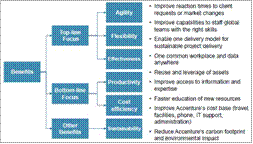
Social media has changed the way employees in organizations work, learn, communicate and collaborate. According to Accenture, companies that invested early to harness the power of social media claim returns as high as 20 to 1, with even greater gains predicted to be on the way and the reality is that its impact will be felt along the entire length of the value chain. Employees, who are also users of public social media sites, were looking for tools to increase their productivity through collaboration across globally dispersed workforce. Collaboration 2.0 is a suite of tools that include blogs, wikis, and youtube, facebook style social media tools that employees can use to do their jobs in a better way and strengthen client relationships. Through these tools 236,000 employees of Accenture located in 120 countries collaborate for organizational growth and Collaboration 2.0 improved team productivity, reduced travel and phone charges via a new world of virtual collaboration and strengthened client relationships. In 2008 Accenture launched collaboration initiative called “Borderless Workplace” which includes technologies a wiki called Accenture Encyclopedia, Accenture media exchange resembling YouTube, personal blogs for employees and a facebook inspired social network called Accenture people, Accenture’s Knowledge Exchange is the place to go to find the information Accenture people need.

Accenture deployed in 2007, Accenture People that is a Facebook-inspired professional/social network that enables employees to collaborate, share knowledge, find SMEs and instantly connect via email, online chat, whiteboard session, high definition telepresence videoconference, phone or voicemail. Each profile is populated with standard company information and Accenture employees are encouraged to expand their profiles and 115,000 employees have updated their profiles and 5000 profiles update every month where employees share pictures, bios, expertise, work-related interests personal interests, hobbies and other optional personal information.

According to Accenture, as employees share more about themselves on their profiles, the connections for prospective teams and colleagues become richer. From a profile, an employee can get to know coworkers, their reporting relationships and experience. Employees can use a colleague-tracker to receive alerts when associates change information on their profile – such as their skills or clients. Company also developed a Wikipedia-style site called Accenture Encyclopedia, to catalogue Accenture business and technical terminology. Close to 1000 entries posted in this encyclopedia.

More than 1,700 Accenture Groups, communities created and run by Accenture employees which enable them to share knowledge beyond their job responsibilities. Group topics span from Java programming to Lean Six Sigma to digital photography. These groups focus on an individual’s needs and interests, as well as the needs of the communities. For microblogging Accenture uses Yammer where teams can securely and quickly connect, Twitter-style, to trade ideas and get the best thinking from their global colleagues. Presently employees post more than 4200 microblog updates monthly.

Blogging capabilities amplify opportunities for sharing experience and expertise. Accenture employees created 10,706 blogs annually, increasing at a rate of more than 200 percent annually. Presently employees post 1000 blog posts a month. Blogs are an informal communications across Accenture as employees recognize the value and power of blogs that can be easily aggregated and tagged. Employees can use this space to post comments on strategies under development, answers to frequently asked questions, etc. Blogs feature thought leadership on a wide range of business issues, with a particular focus on helping companies achieve high performance and also discuss about emerging technologies and career experiences of select employees.

Accenture Media Exchange is a You-Tube-type tool that included videos related to training, marketing, knowledge transition and community-building videos circulating among employees. Currently 12,000 video items posted to Accenture Media Exchange. Videos posted include included executive interviews, project team presentations, and humorous snippets, and came from users around the world. Video content posted on the site typically is viewed by hundreds or even thousands of colleagues within a few days. Viewers can rate and comment on the posted content as well as download material useful for other applications.

According to Accenture, the knowledge base of Accenture’s employees is a massive resource and a critical asset and includes discussion forums, blogs, wikis and even ratings, comments, cross-search downloads and recommendation functionality. The existing knowledge repository, called Knowledge Exchange, was migrated to global Microsoft platform and consolidated its knowledge assets into a central repository based on Microsoft SharePoint Portal Server. The development of a new Knowledge Exchange application enabled Accenture to retire over 40 databases and offer a single point of access through the Accenture Portal (the company’s employee portal). Accenture's use of NewsGator as a micro-blogging tool in the Microsoft SharePoint platform brings a geographically dispersed workforce together to meet clients' needs.

Consolidating the knowledge assets resulted in the enterprise search engine to index the content thoroughly and with a consistent taxonomy applied and IT team was able to fully index the actual content of all documents so searches would yield more relevant results. Now, Accenture employees can search a broader range of knowledge assets from a single point of access, or search deeply within an attachment. Today, the search engine indexes approximately 115,000 attachments and topic pages in the Knowledge Exchange. Accenture-wide, employees can also search across almost four million pages or attachments from 46 different Accenture content sources, enabling efficient searches that yield highly relevant results. Accenture Knowledge Exchange Activity Feeds includes RSS-like activity feeds to notify employees when articles are published, capture project status updates, display tasks and suggest related documents.

Accenture is working on more sophisticated ways to bring social media into the workplace and recent trends in social media and mobile technology have created new challenges and forced Accenture to reevaluate the IT infrastructure it has in place. Accenture has also focused on measurement strategy and on understanding what tools employees were using, and how and why they were using them. Monthly Collaboration 2.0 scorecard and other reports help Accenture continuously track usage, cost savings, employee satisfaction and impact on the clients. According to company website, cost benefits for the company included More than 20 million minutes of company-standard monthly VoIP audio/video usage, resulting in avoided mobile and landline long distance/international voice costs, more than 5,000 annual video conferencing meetings resulting in avoided travel costs and Telepresence usage has slashed travel costs and the savings are exceeding the annual targets, thus far returning more than two times the monthly operating cost.

According to Accenture, they even made these tools available to their FORTUNE 500 clients, bringing clients into their collaborative culture. Links between Accenture and client companies include Telepresence, desktop audio and video, secure IM, desktop-sharing and unified messaging that dramatically improves dialogue with clients. Collaboration 2.0 has significantly improved client satisfaction levels and clients are being services well with right skilled consultants at right time for the critical projects and reaction time to client’s requests have also improved. Employees too are satisfied with this collaboration suite as they are able to collaborate seamlessly with their colleagues across the globe, share their knowledge, interact with SMEs and voice their opinions regarding the company policies and strategies. Accenture is one of the best examples for understanding the business impact of integrating social media tools into the organization.

Discussion points:
  1. What are the key lessons of the Accenture Social Media Strategy and how it improved profitability?
  2. What is the role played by Collaboration 2.0 in improving the employee satisfaction and how to encourage employees to utilize this best?
  3. How did clients of Accenture profit from its internal social media tools?
  4. What is the role played by social media tools in organizational Knowledge management strategy?
Appendix:
Figure 1: Collaboration benefits outlined in Accenture's business case. Copyright 2010 Accenture